Themes Around Successful Placemaking
Placemaking is one of those ideas that’s easy to talk about and harder to deliver. When it works, though, the results are obvious. The places that succeed aren’t just visually strong or well marketed, they’re the ones people gravitate towards, spend time in, and begin to feel part of.
Across recent UK coverage, regeneration commentary and on-the-ground projects, the same themes consistently emerge. Successful placemaking isn’t about isolated moments or standout architecture. It’s about long-term thinking, collaboration and a clear focus on how places are actually used.
Place Comes Before the Project
One of the clearest shifts in how placemaking success is discussed is the move away from building-led narratives. Increasingly, the strongest projects are those that start with place, public life, movement, social connection rather than the asset itself.
That mindset is something we see reflected across the places we work in and operate from. Whether it’s a riverside neighbourhood like Brewery Wharf in Leeds or a dense urban setting such as Bermondsey Street in London, the success of these areas comes from what happens beyond the front door. Cafés, streets, public routes and everyday moments all play a role in shaping how a place feels.
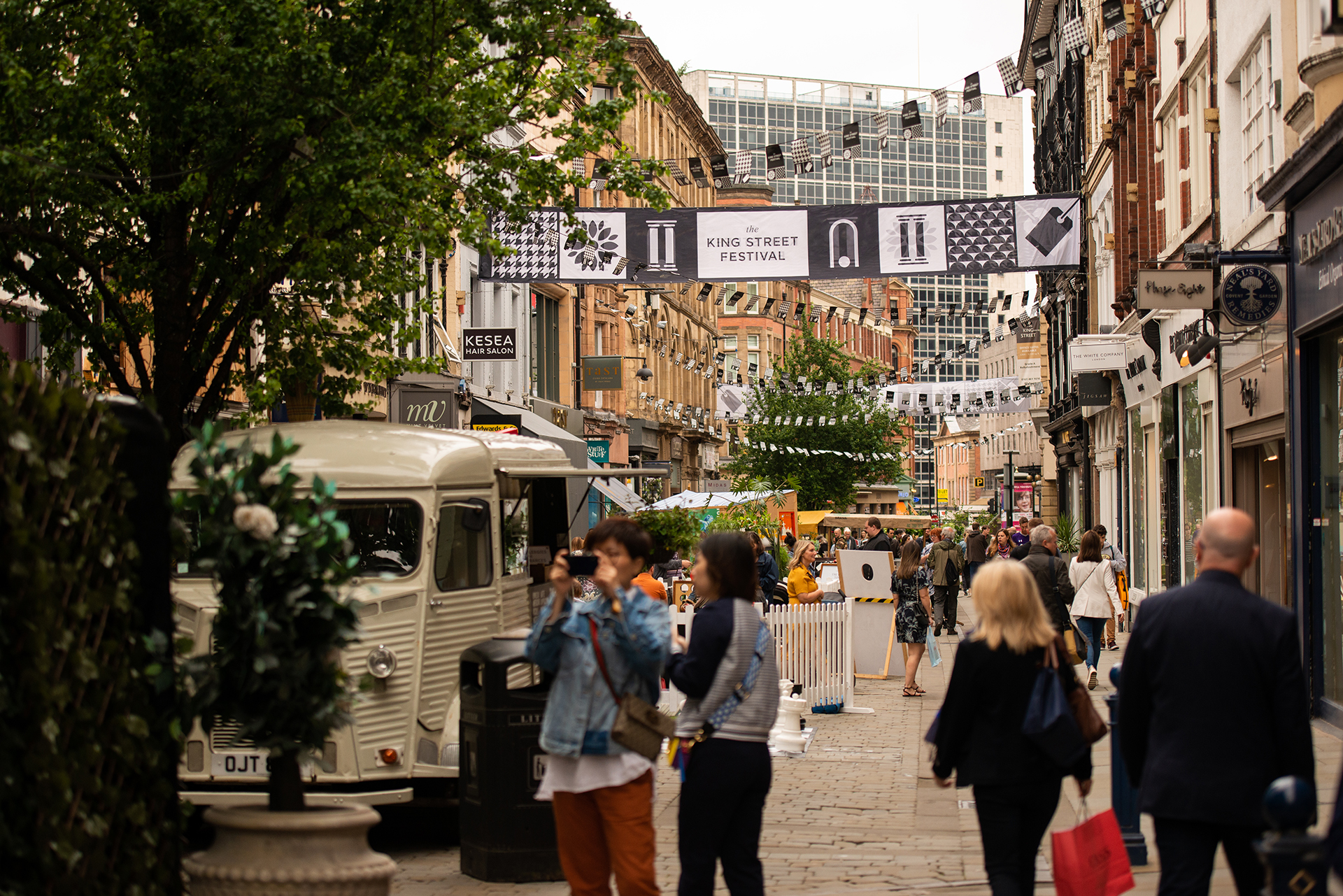
Places such as King Street in Manchester, where we have implemented successful placemaking for several years, demonstrate how this approach plays out over time. Its strength comes not from a single development moment, but from the continuity of use, the mix of activity at street level and its role within the wider city centre. It works because it supports daily life first, with buildings playing a supporting role rather than leading the story.
Partnership Makes Placemaking Possible
Placemaking doesn’t happen in isolation. It relies on alignment between local authorities, developers, communities and operators, particularly on complex, long-term regeneration projects.
This is something we see time and again in practice. The most successful places are rarely the result of a single vision imposed from the top down. They’re shaped through collaboration, compromise and a shared commitment to long-term outcomes.
At a neighbourhood scale, Smithfield in Stoke-on-Trent reflects this shift. Its regeneration is rooted in long-term partnership, with a focus on stitching the area back into the city through active streets, mixed uses and a renewed sense of place. Rather than being driven by a fixed end state, the emphasis is on adaptability, stewardship and how the area functions day to day.
That same principle applies at every scale, from city districts to individual buildings, where partnership and long-term management matter as much as the initial concept.
Policy as a Platform, Not a Barrier
There’s also been a noticeable change in how planning and policy are framed within placemaking conversations. Rather than being seen as a constraint, good policy is increasingly recognised as a platform for better places.
Clear guidance around connectivity, public realm, sustainability and mixed-use development can raise standards and create consistency, particularly in regional cities experiencing rapid change. When policy is aligned with placemaking ambitions, it supports places that are more resilient, inclusive and better connected to their surroundings.
From our perspective, the strongest outcomes happen when policy, design and branding are pulling in the same direction, reinforcing the identity of a place rather than diluting it.
Measuring What Matters
Perhaps the biggest shift in placemaking discourse is how success is measured. The focus is no longer on launch moments or visuals alone, but on performance over time.
That means looking at how places are used day to day. Footfall, dwell time, social interaction, wellbeing benefits and economic activity are increasingly used as indicators of success. At Mayfield, early reporting points to increased use, restored ecology and a growing role within Manchester’s wider urban life.
This aligns with what we see across many of the places we work with: the real test of placemaking isn’t how it photographs, but how it lives.
What Successful Placemaking Looks Like Today
Across UK commentary and real-world examples, the same qualities continue to surface:
Places with public spaces people genuinely use
Neighbourhoods that blend work, life and culture
Strong local identity rooted in context
Long-term collaboration across sectors
Policy frameworks that support quality and connectivity
Together, these themes reflect a broader truth. Placemaking is not a moment, it’s an ongoing process.
Why This Matters
As expectations around ‘place’ continue to rise, so does the need for authenticity. People want places that feel considered, human and connected – not just well branded.
The projects setting the benchmark today understand that. They put place before project, value partnership, and focus on how environments perform over time.
At its best, placemaking doesn’t shout. It simply works.