Insights
29.6.26
2 min read
Is IKEA secretly one of the best place strategists in the World?

 Angus Armitage

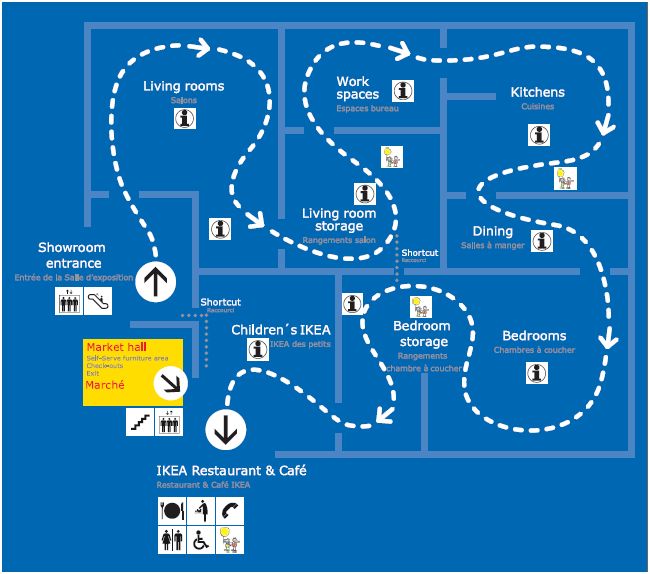
When recently listening to an excellent podcast, Acquired, which tells the definitive history & strategy of the world’s greatest companies, it occurred to me that amongst other accolades IKEA may be one of the best place strategists in the world. The story behind Ingvar Kamprad and his journey to create the largest furniture retailer in the world and his obsession for quality and value is fascinating.
Flatpack to reduce transportation costs and how they made their customers willing stock pickers and furniture assemblers, as a tactic to minimise costs, is nothing short of genius.
Once Kampard had established IKEA as a furniture retailer, following Initially selling pens and wallets and other small goods, the original model was mail order. But in contrast to their competition a small showroom in Småland was his first foray into place and how this could inspire people into action. People travelled from all over Sweden to visit, and as such Kampard and his family gave out refreshments and light bites – possibly the foundation of the idea for meatballs, but that’s another part of the story.
Nobody goes to IKEA for one thing. You tell yourself you’ll grab a lamp. Forty-five minutes later you’ve walked through room sets, sat on sofas, discovered storage you didn’t know existed and somehow eaten meatballs.
That isn’t accidental. IKEA is one of the most carefully orchestrated physical experiences in the world. Long before customer journeys, placemakingThe process of designing, managing and marketing public spaces to create successful, attractive and functional communities that reflect local culture and enhance well-being. and destination strategy became industry terms, IKEA was already designing environments around human behaviour.
Everyone has experienced it.
You never get lost accidentally. You discover things. You follow a story.
From a logistics perspective IKEA is inefficient. You rarely take the shortest route, but that’s intentional.
Because unexpected discovery creates value; a product you didn’t expect, an idea you hadn’t considered, a reason to stay longer.
Retail destinations, mixed-use schemes and high streets often over-prioritise speed.
IKEA isn’t really a furniture company, it’s an experience company built around human behaviour.
This is perhaps one of the biggest lessons for placemakingThe process of designing, managing and marketing public spaces to create successful, attractive and functional communities that reflect local culture and enhance well-being..
Whether we’re creating office destinations, regeneration projects, mixed-use neighbourhoods or cultural districts, success rarely comes from simply building space. It comes from designing journeys people actually want to take.