Insights
16.9.26
3 min read
New words, new worlds: Flexing our minds in the age of AI

 James Newson
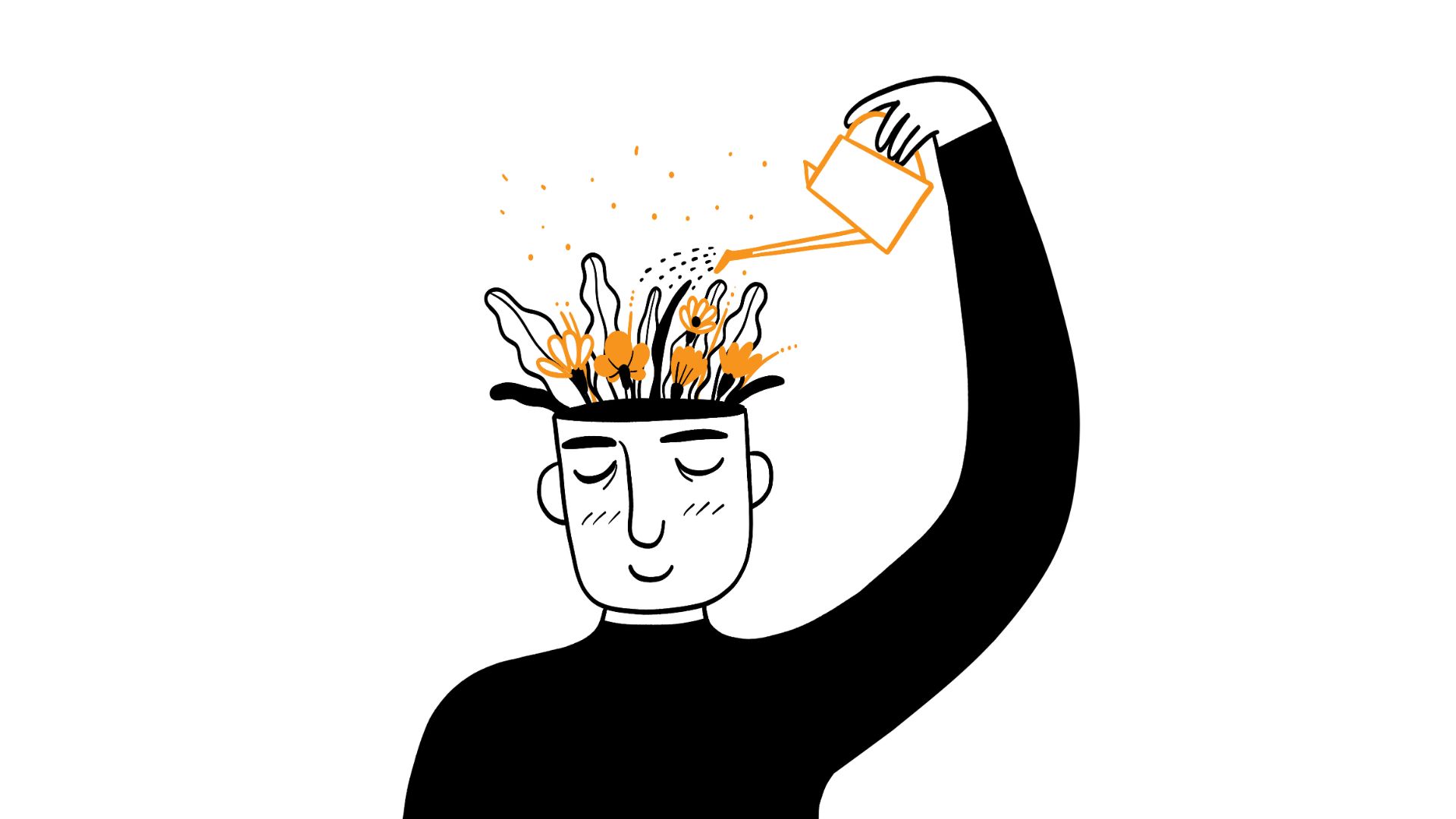
Just as we rely on physical exercise to counteract sedentary jobs, we must actively condition our minds in the age of AI. Instead of passively allowing algorithms to do the thinking for us, we need to consciously flex our cognitive muscles, critically analysing information to drive our own creative output, rather than simply letting technology take the lead.
This begs the question: how much exercise do you actually give your brain? As a brand designer, my daily cognitive flex involves translating the invisible world of ‘place culture’ into visual language. I spend my time figuring out how a specific colour, curve, or typeface can make people feel like they belong in a space. Meanwhile, my wife teaches spoken languages to people from all walks of life, frequently highlighting the profound mental benefits her students experience. Though our mediums differ, we are both navigating the complex, highly human workout of language.
Whether you’re pushing pixels to define a city district or fumbling through your holiday Spanish, you are doing something profound to your brain. Mastering a visual language and learning a spoken one aren’t just similar skills, they are two sides of the same cognitive coin. Here is why practicing either form of language provides the ultimate mental upgrade.
You physically alter your brain structure
The brain is remarkably plastic. Every time you wrestle with foreign syntax or untangle a complex design layout, you are forcing your brain to build dense new neural pathways. You aren’t just making art or learning how to order a coffee in Spanish; you are actively thickening your grey matter, upgrading your mental “RAM,” and building a powerful defence against cognitive decline.
You unlock new dimensions of reality
In English, we have one word for “love”; Ancient Greek has six. Learning a new language literally gives you the vocabulary to feel things you didn’t know you were allowed to feel. Visual design does the exact same thing for your eyes. Once you grasp negative space or colour theory, you stop seeing just a “billboard” and start seeing tension, hierarchy, and flow. Both disciplines supercharge your pattern recognition, shifting your world from black-and-white into high definition.
You hardwire empathy into your thinking
You can’t learn a new language without adopting its world view, and you can’t design a space without stepping into the shoes of the community who will use it. Both practices are the ultimate ego-killers. They force you out of your own head, dissolve your personal biases, and actively train your brain to process the world through someone else’s lived experience.
The Takeaway: Friction is Growth
You don’t need to be fluent in Mandarin or a master of Adobe Illustrator to reap these rewards. The magic happens entirely in the attempt. That frustrating friction of not knowing the right word, or sketching fifty terrible logos before finding the right one? That isn’t failure, that is the exact, physical feeling of your brain growing. So, pick up a sketchbook. Download a language app. Expand your vocabulary, whether visual or verbal and watch how much bigger the world gets.